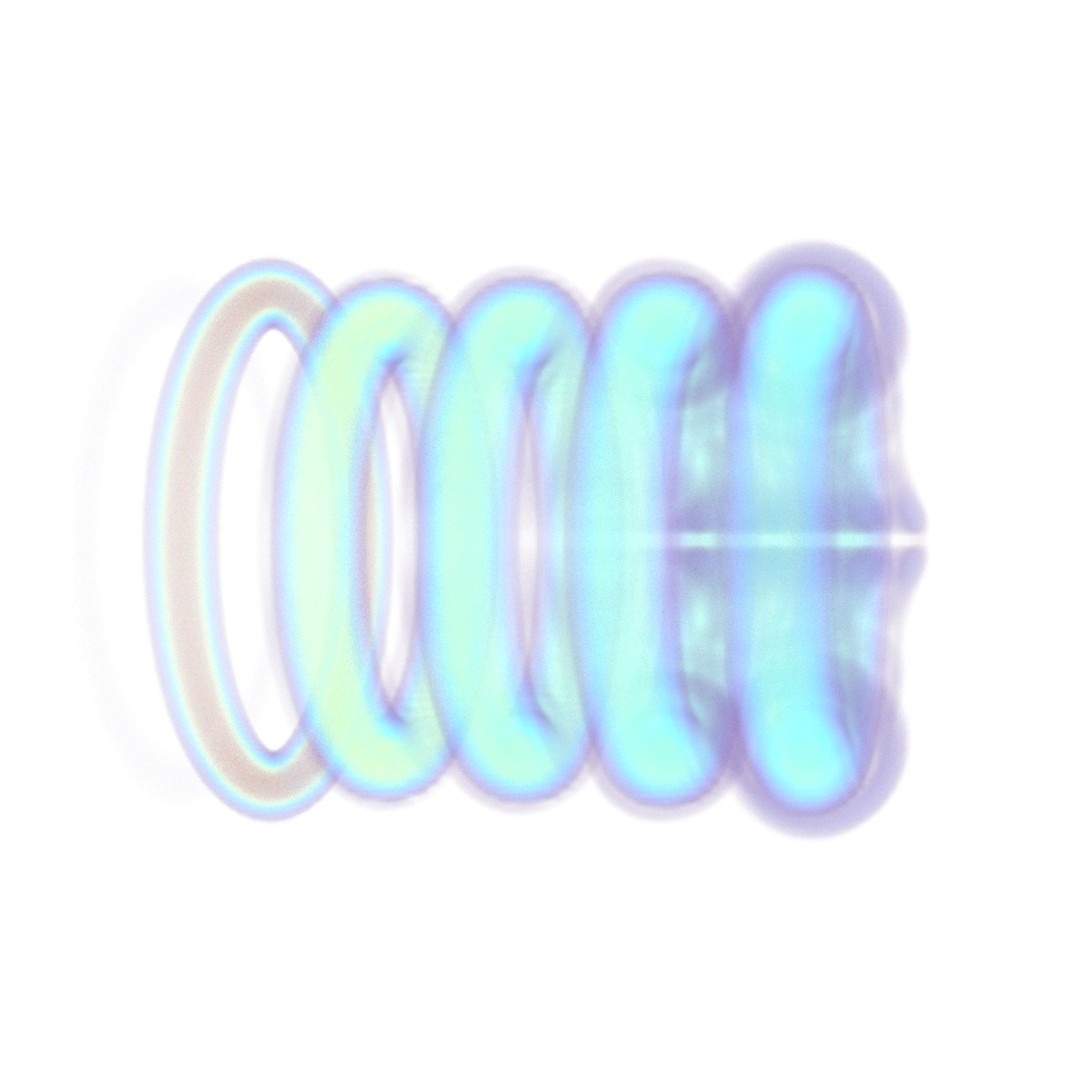
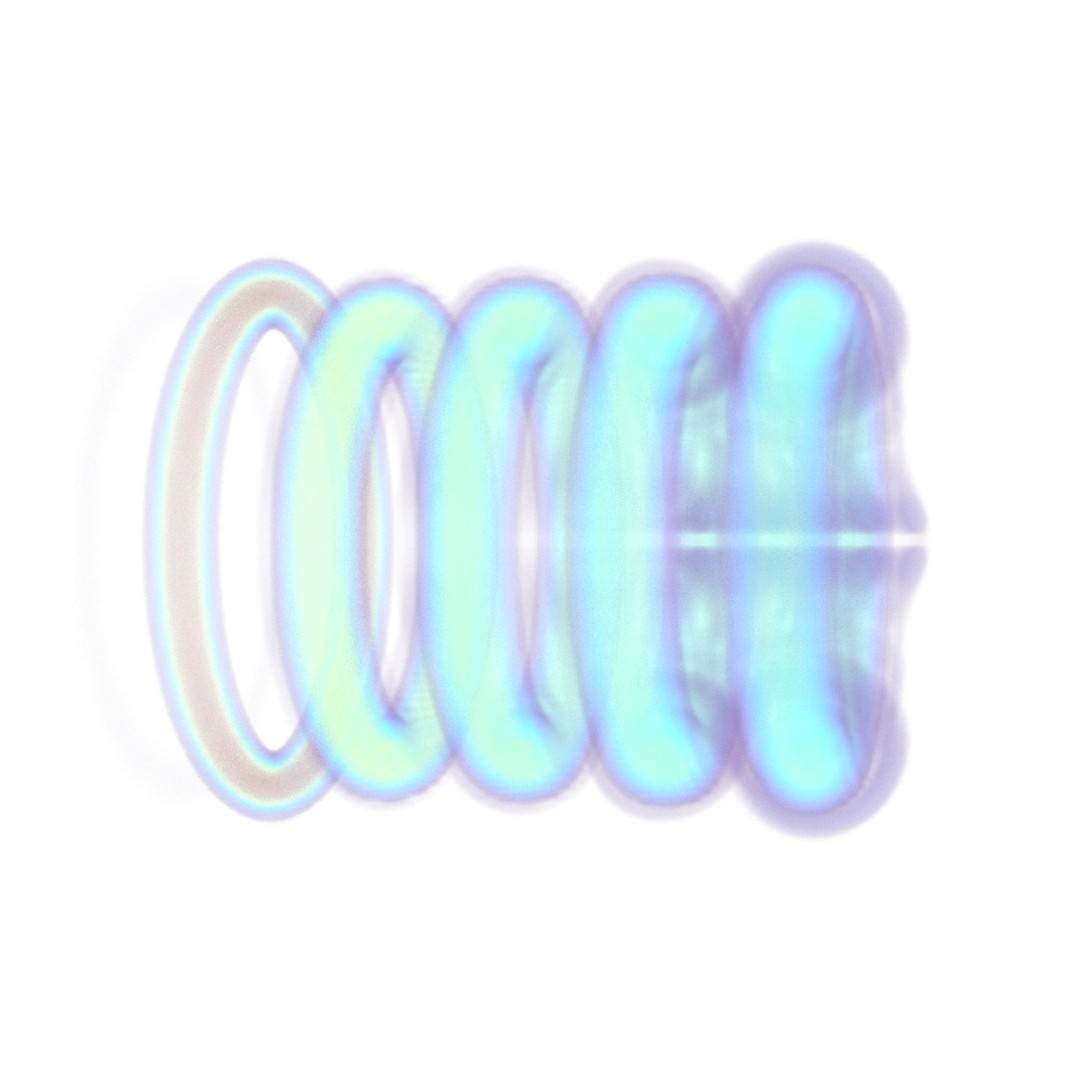
Two-phase Impulse Fluid on Particle Flow Map

Unifying interfacial tracking and impulse-based dynamics within a single Lagrangian particle flow map to capture complex, vortex-rich two-phase flows.
Hui Wang, Jinjin He, Xubo Yang

paper (coming soon) code (coming soon)
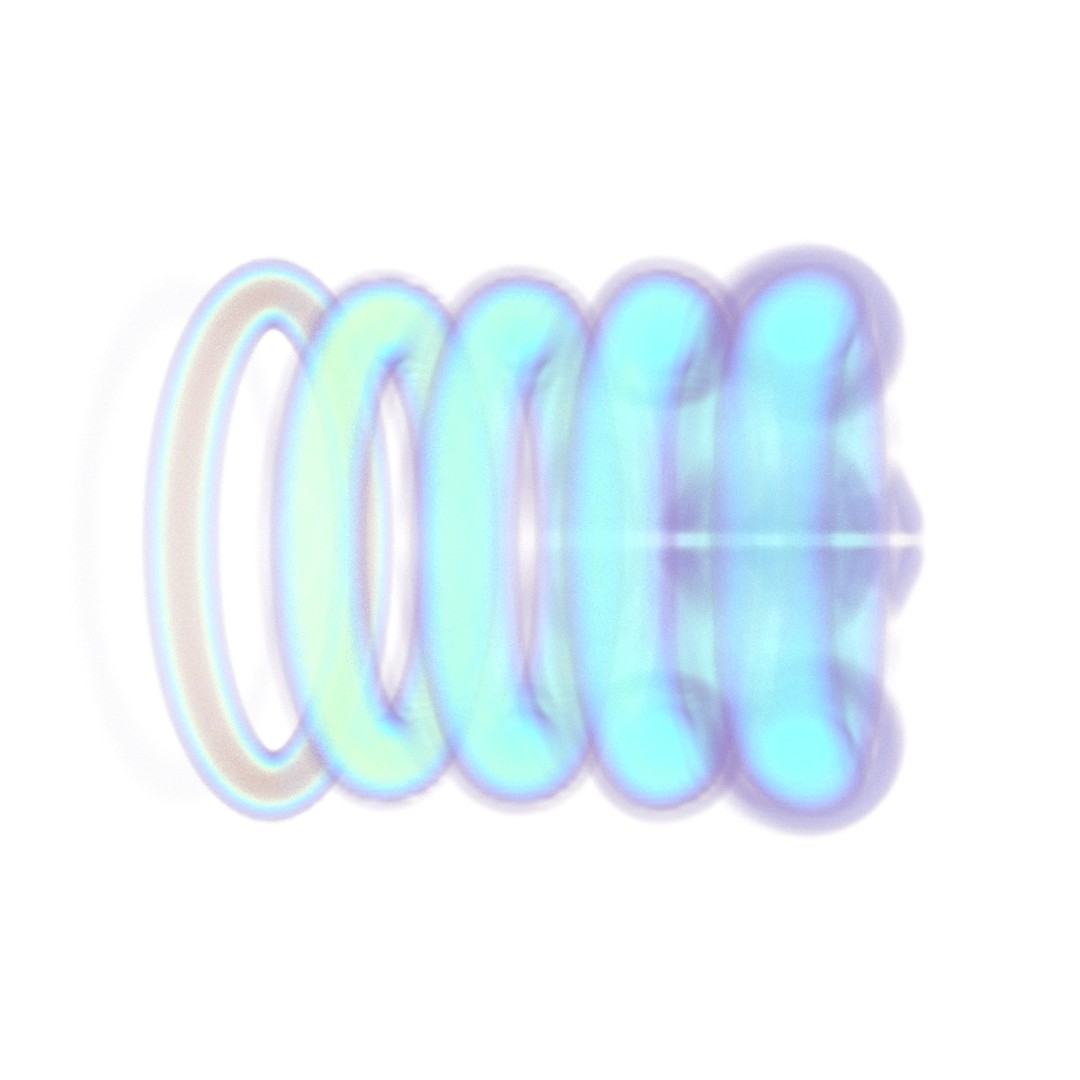
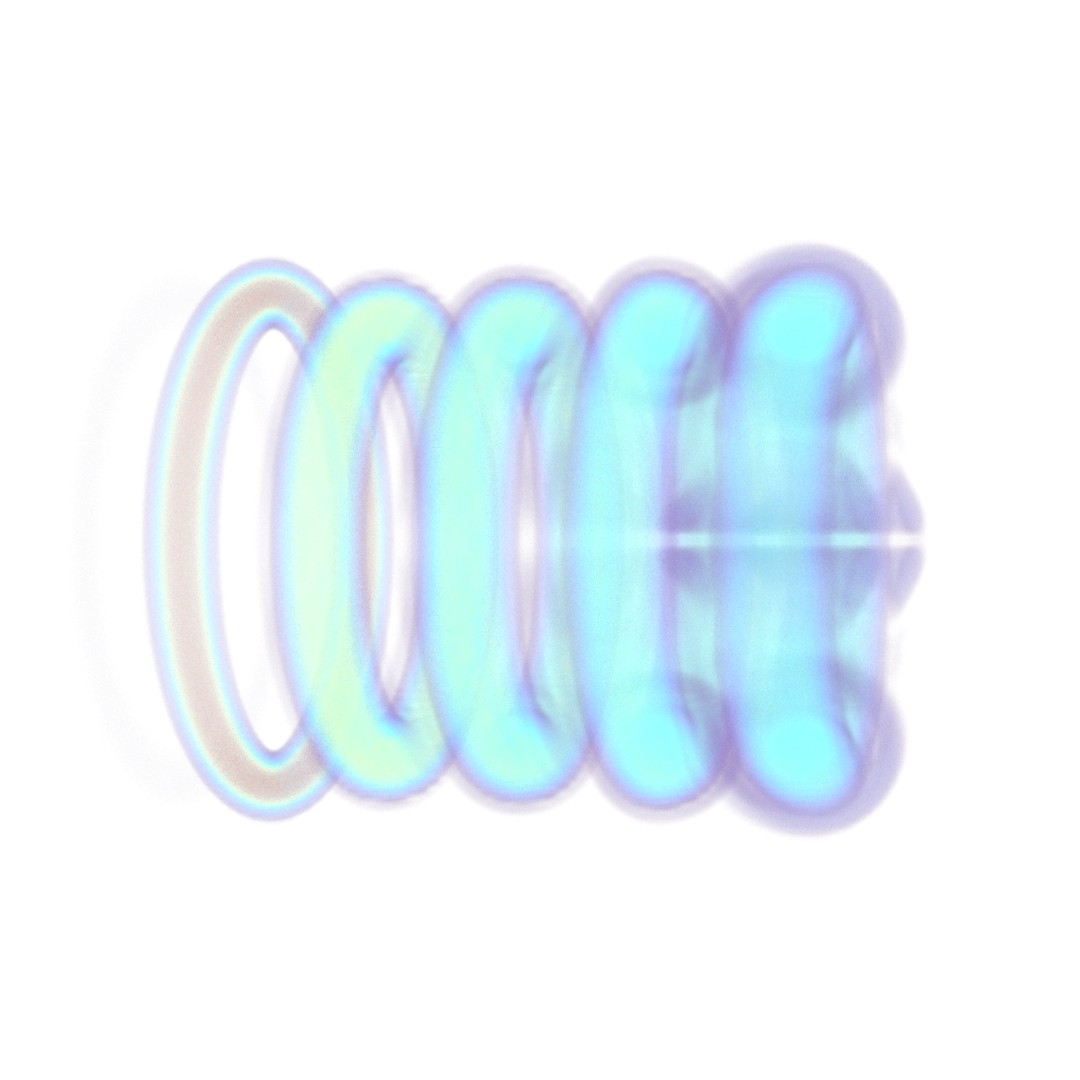
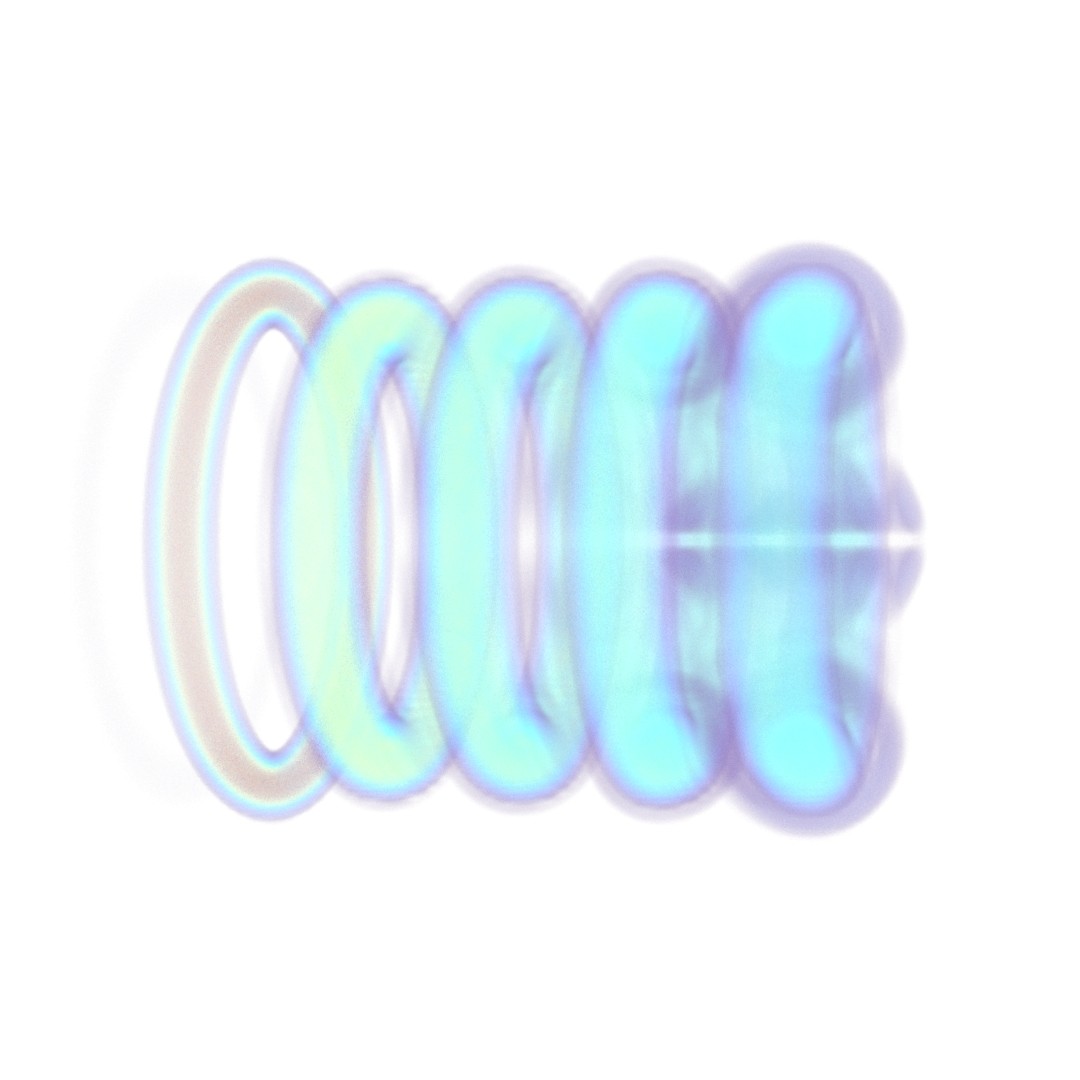
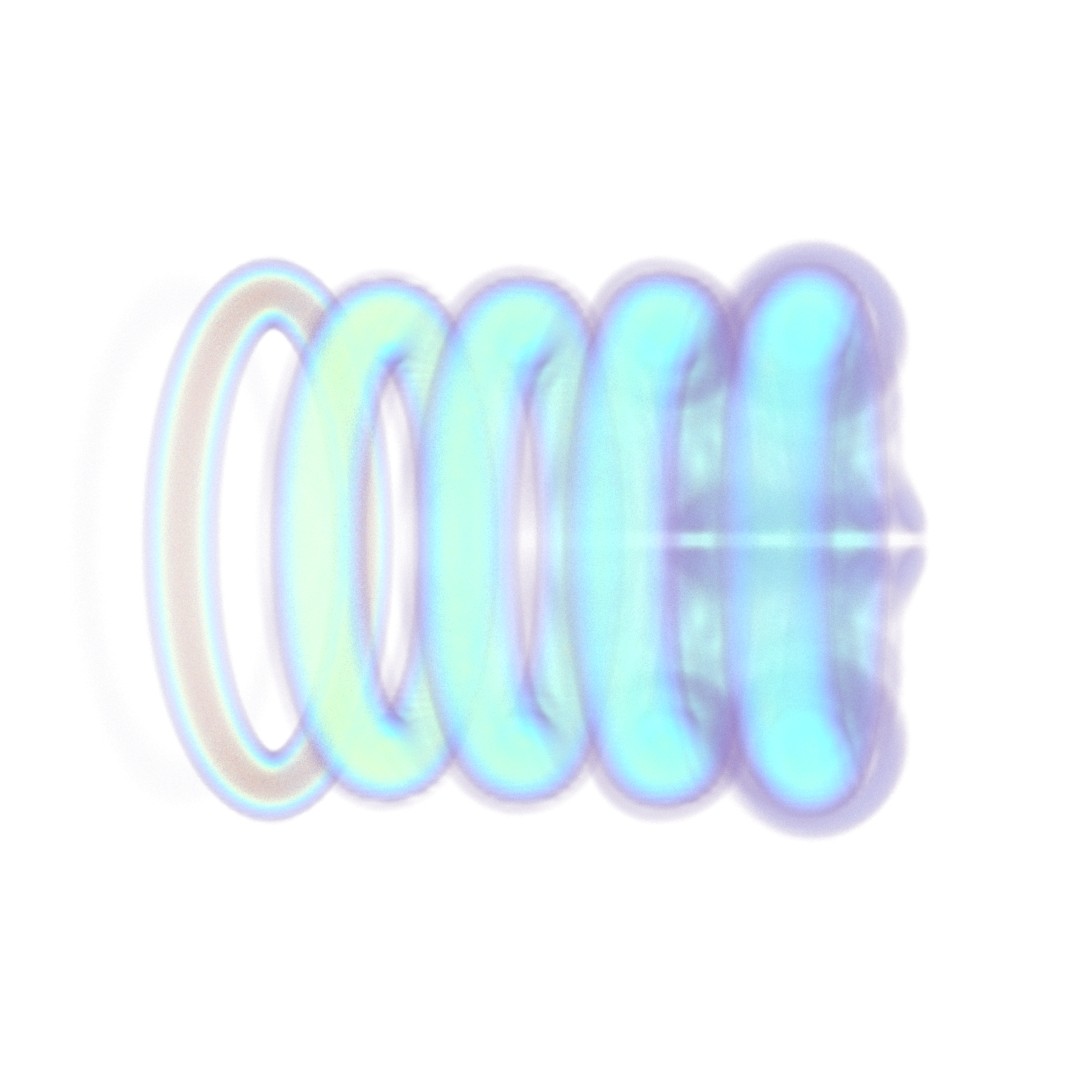
Breaking wave teaser Bubble ring merging teaser Vortical drainage teaser Bubble ring leapfrogging teaser Wave-cylinder interaction teaser

Overview

Single particle flow map for both geometry and dynamics

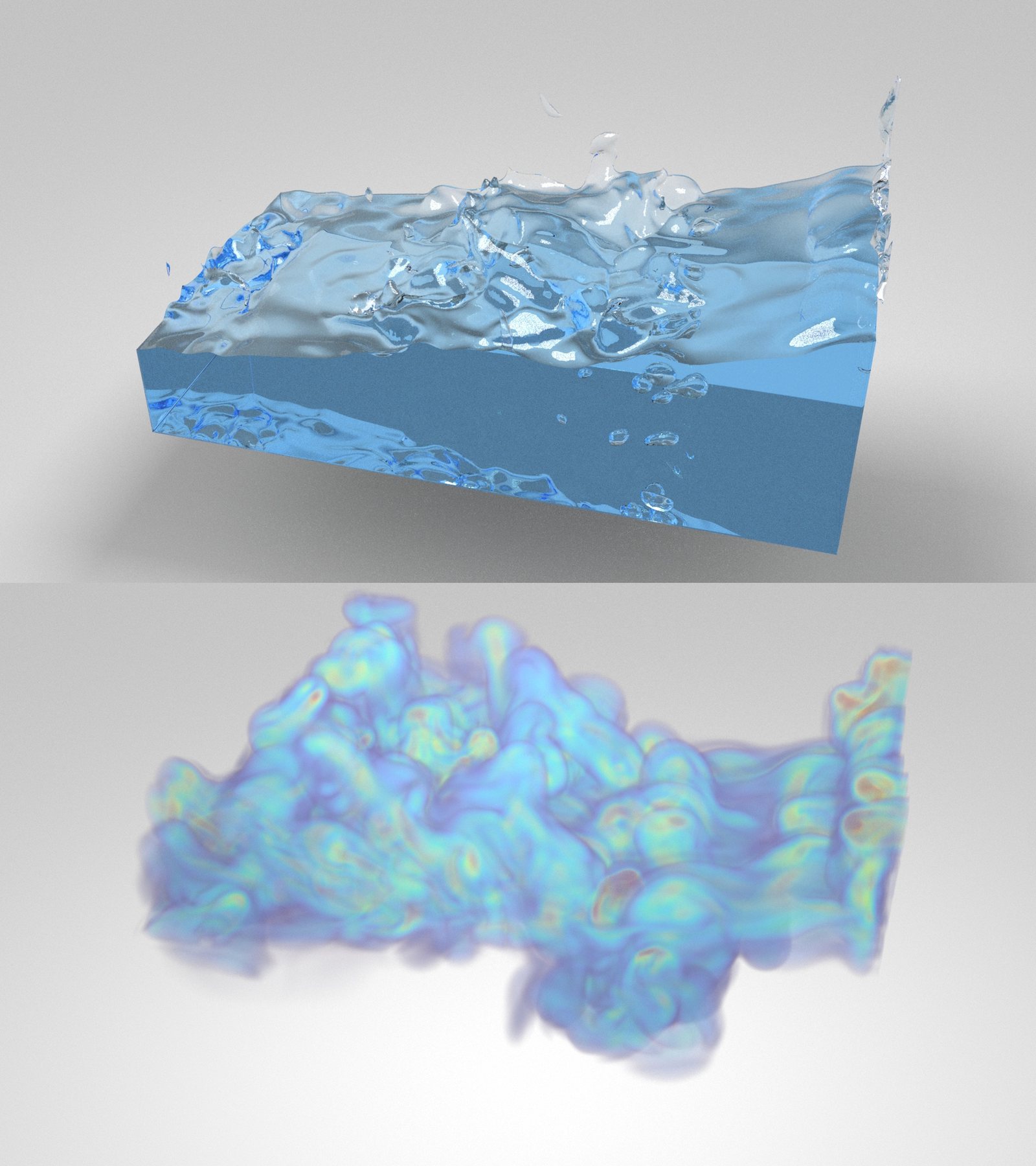
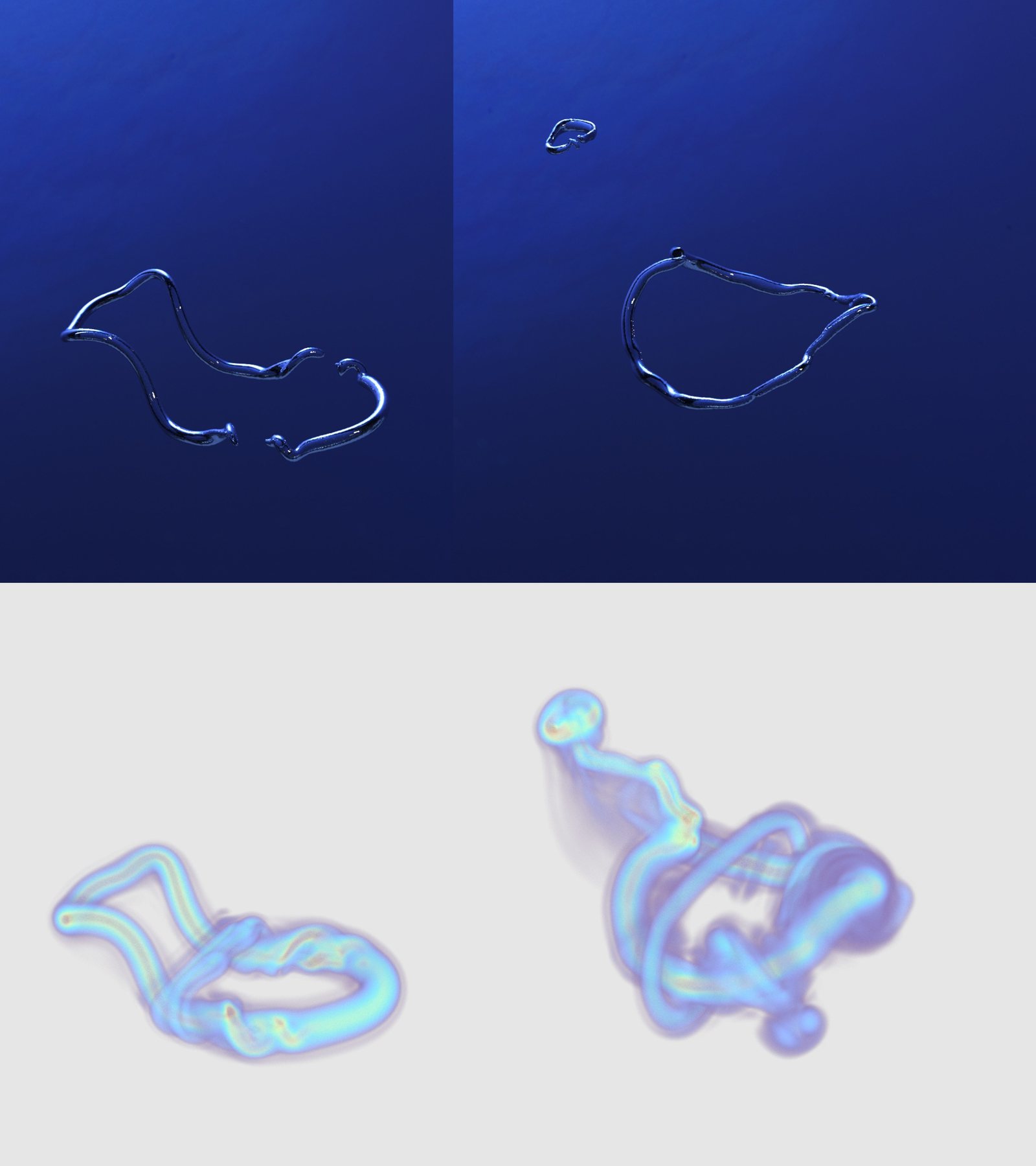
We present a novel particle flow map framework for the high-fidelity simulation of complex two-phase flows. Our method is built upon a unified Lagrangian formulation in which a shared flow map jointly governs the phase interface evolution and the underlying fluid dynamics. For interface tracking, our particles drive a particle-flow-map-based level set equipped with a hybrid reinitialization strategy, effectively preserving sub-grid geometric features while ensuring robust topological stability. For two-phase dynamics, we introduce an impulse-based solver that reformulates the impulse path integration to depend solely on the continuous velocity field, enabling efficient and accurate handling of interfacial discontinuities without artificial smoothing. By leveraging the particle flow map's inherently low-dissipation tracking of both geometry and dynamics, our framework achieves enhanced geometric accuracy and physical fidelity relative to existing two-phase solvers. Our framework faithfully captures the intricate interplay between intense vortical motion and complex interface geometry, as evidenced by the reproduction of a broad range of challenging phenomena, including interacting bubble rings, breaking waves, and whirlpool drainage.

Method

Pipeline overview
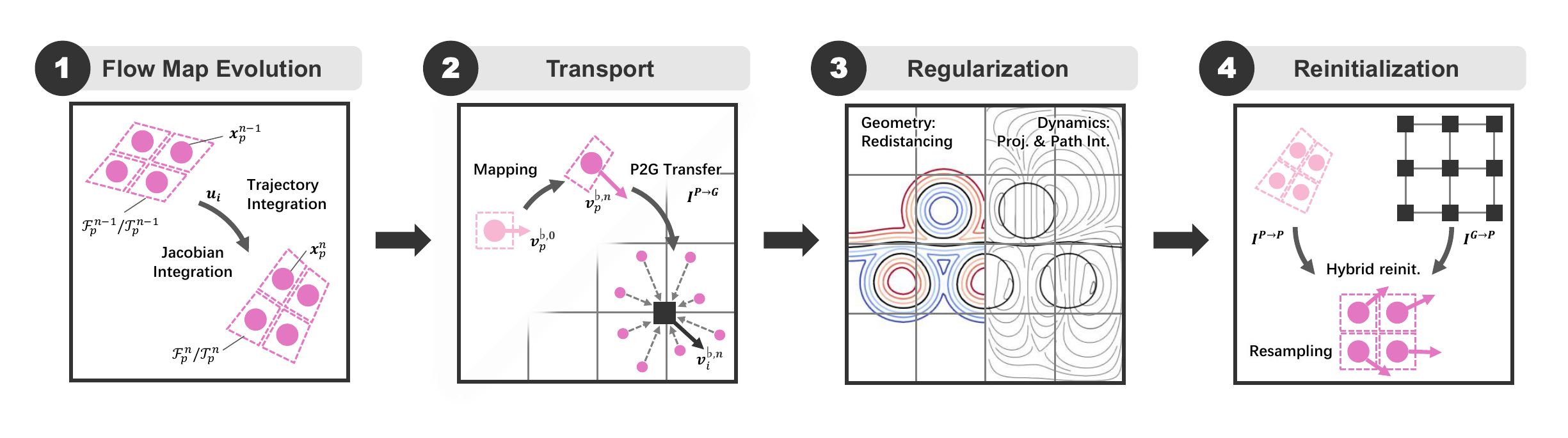
Pipeline figure showing flow map evolution, transport, regularization, and reinitialization.
Pipeline overview. The PFM-based simulation pipeline for level set interface tracking and two-phase impulse dynamics proceeds in four main stages: (1) flow map evolution integrates particle trajectories and flow map Jacobians; (2) transport maps Lagrangian particle attributes (level set and impulse) and transfers them to the grid; (3) regularization enforces geometric and dynamic constraints on the grid through level set redistancing and pressure projection accompanied by path integration; and (4) reinitialization is performed periodically.

Results

Two-phase phenomena

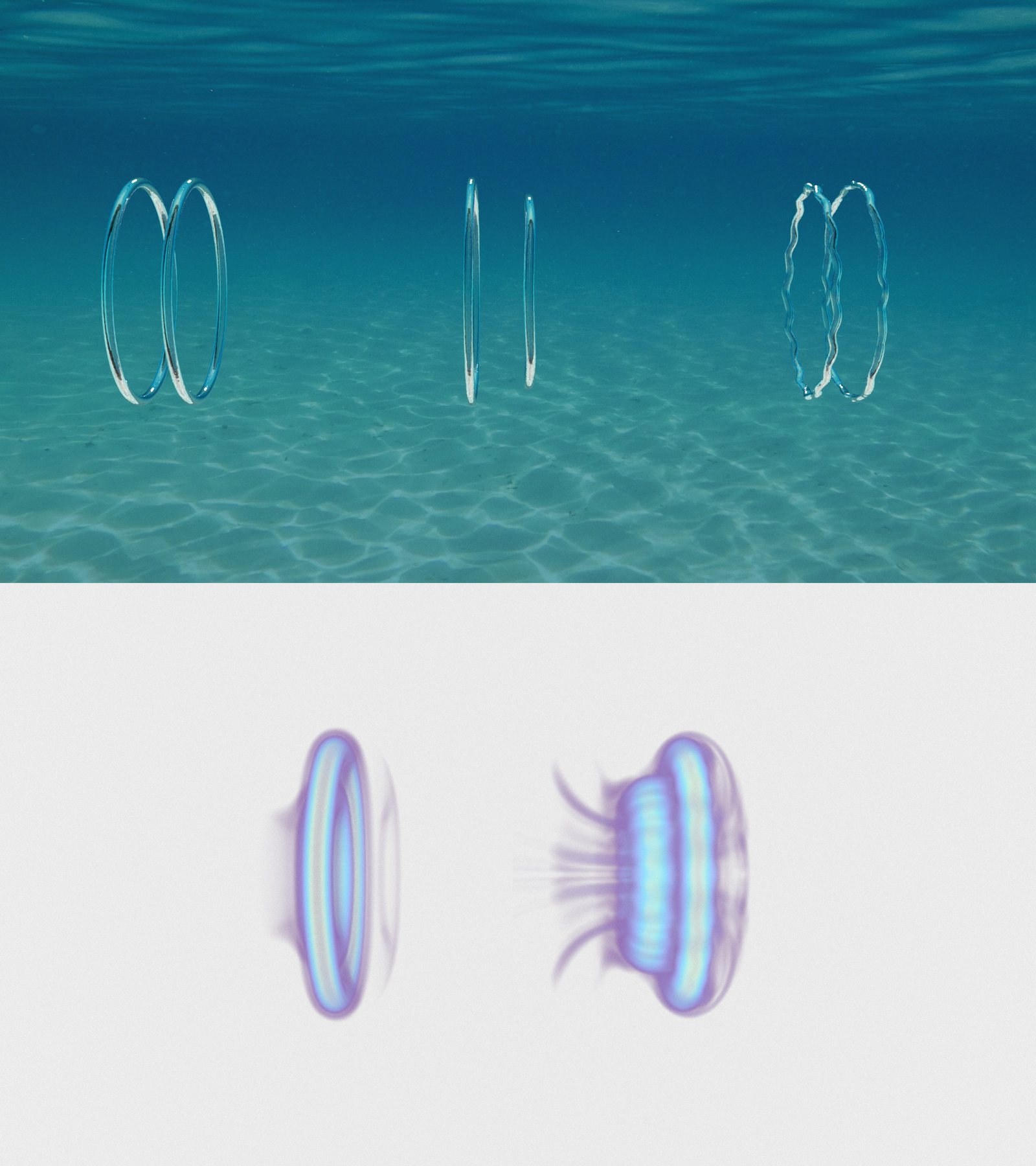
Bubble ring merging
Bubble ring leapfrogging
Breaking wave
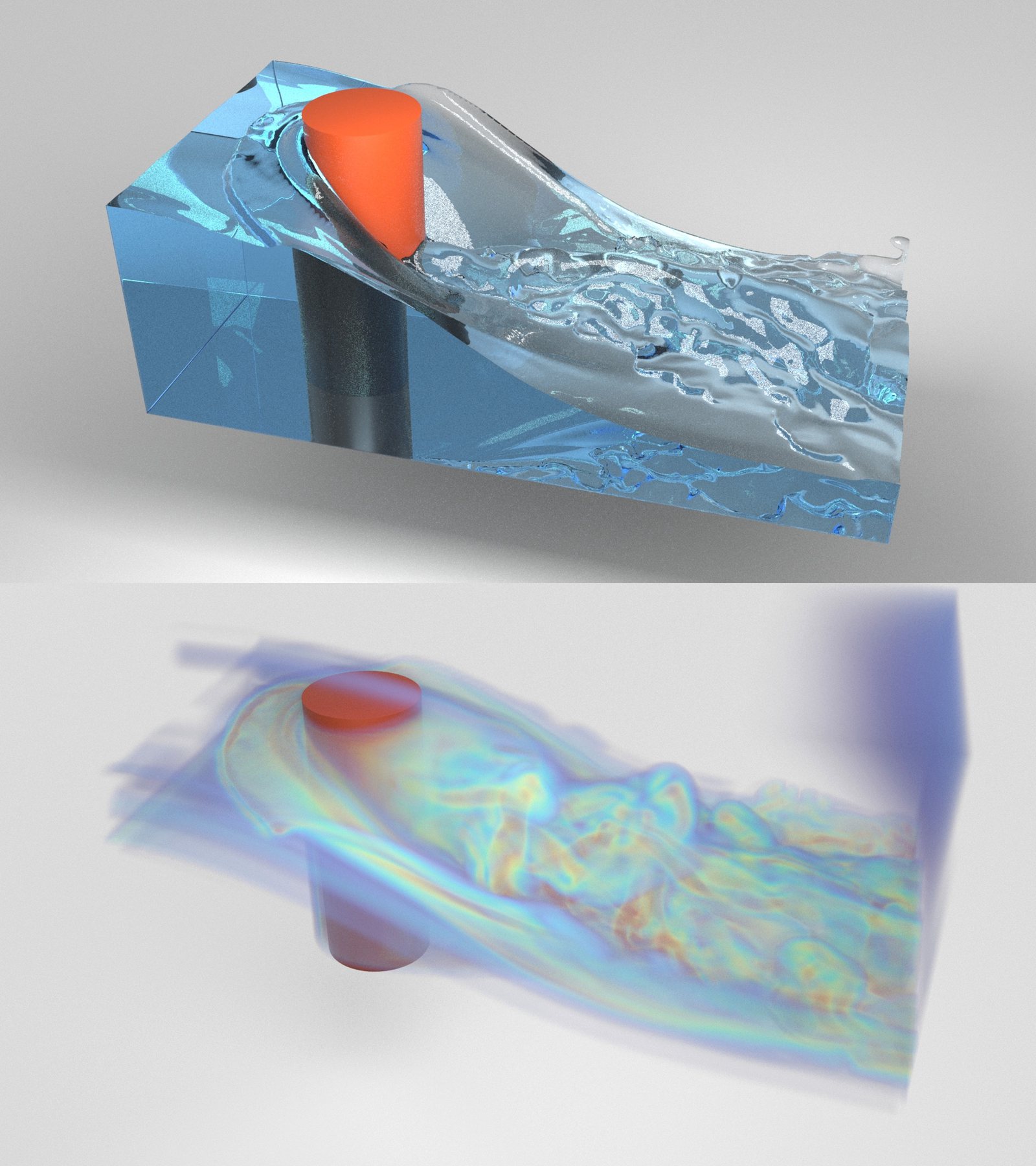
Cylinder-flow interaction
Moving board
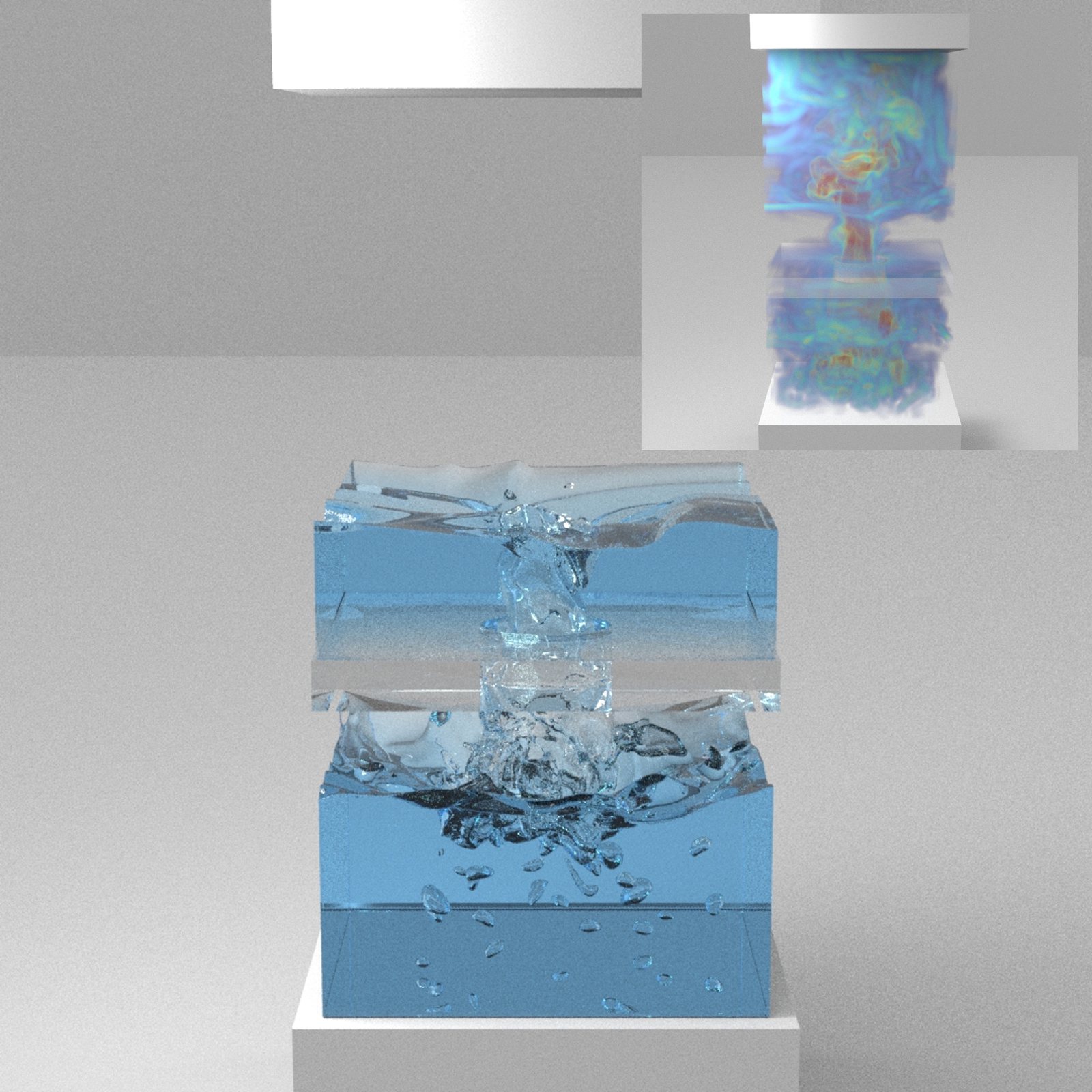
Glugging and drainage

Comparison

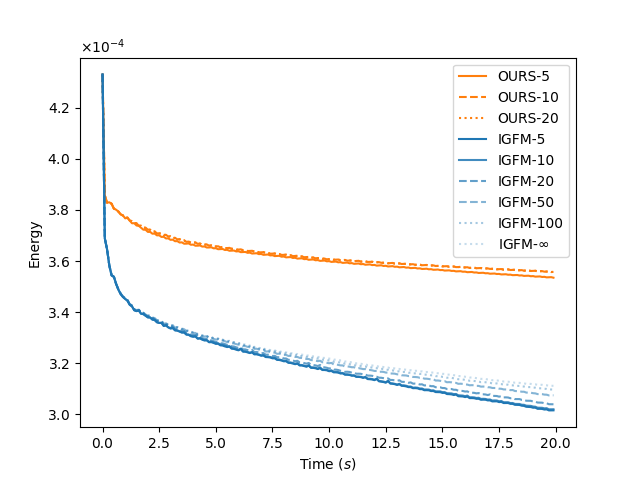
Long-term preservation of volume and energy

Single vortex ring: OURS vs. IGFM

IGFM-xx: xx denotes the reinitialization period.
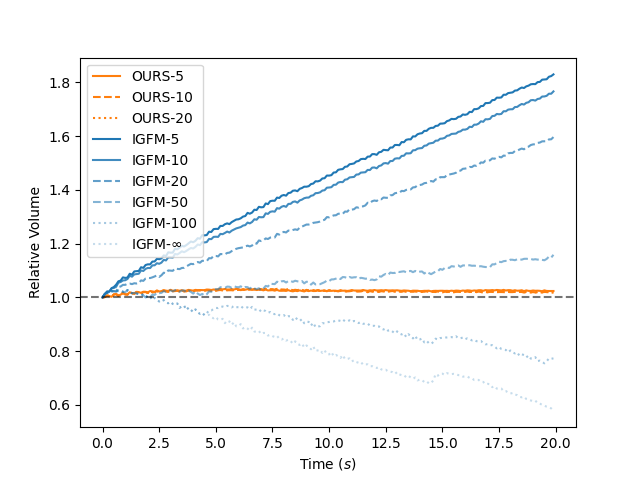
Single ring volume comparison chart. Single ring energy comparison chart.
Mesh
Our method on the single ring scene.
OURS
IGFM on the single ring scene.
IGFM-5
IGFM reinitialization period 10.
IGFM-10
IGFM reinitialization period 20.
IGFM-20
IGFM reinitialization period 50.
IGFM-50
IGFM reinitialization period 100.
IGFM-100
IGFM without reinitialization.
IGFM-Inf
Vorticity
Our method vortex field on the single ring scene.
OURS
IGFM vortex field with reinitialization period 5.
IGFM-5
IGFM vortex field with reinitialization period 10.
IGFM-10
IGFM vortex field with reinitialization period 20.
IGFM-20
IGFM vortex field with reinitialization period 50.
IGFM-50
IGFM vortex field with reinitialization period 100.
IGFM-100
IGFM vortex field without reinitialization.
IGFM-Inf